
Is 1xBet Legal in India 2026? Latest News Today & Arrest Risks Explained
If you are reading this in 2026, you are likely staring at a screen filled with conflicting notifications. One minute, you see a headline about the Ministry of Electronics and Information Technology (MeitY) issuing a fresh “crackdown” on betting apps; the next minute, you see your friend posting a screenshot of a winning slip from last night’s Premier League match on 1xBet.
The disconnect is real, and it is confusing.
As someone who has been wagering professionally for over a decade and analyzing the SEO landscape of the iGaming industry, I can tell you that the gap between “official policy” and “on-ground reality” has never been wider. I have seen the bans of 2023, the tax amendments of 2025, and now the sophisticated blocking mechanisms of 2026.
Here is the unvarnished truth about 1xBet’s status in India today, stripped of the fear-mongering and focused on what actually matters to you: your safety and your money. (🔥 Join 1XBET now! Click [betx100.com] → Code: betxone → 💰 100% BONUS!)
The “Ban” vs. “Block” Paradox: What’s Actually Happening?
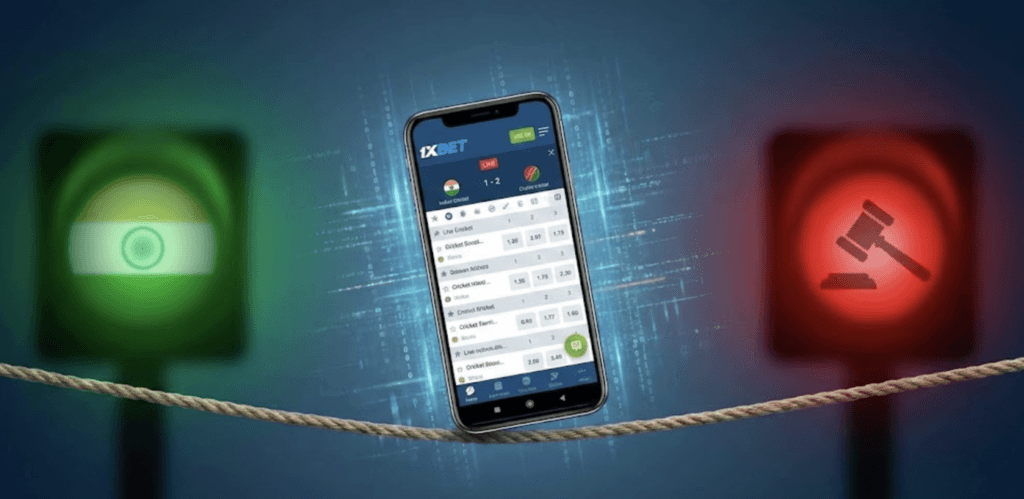
To understand if 1xBet is “legal,” you have to stop looking at it through the lens of traditional commerce. In 2026, the Indian government isn’t “banning” 1xBet in the sense of sending police to their headquarters (which are comfortably offshore in Curacao). They are engaging in a digital game of “Whack-a-Mole.”
Here is the technical reality of the current legal landscape:
- The Section 69A Strategy: The government uses the IT Act to order Internet Service Providers (ISPs) like Jio or Airtel to block access to specific URLs. This is why
1xbet.commight not load without a VPN, butbetx100.comor the app works perfectly. The block is on the address, not the entity. - The Offshore Loophole: Indian laws, including the aggressive GST enforcement on “Real Money Gaming,” primarily target companies registered in India. 1xBet has no physical servers or corporate presence on Indian soil. They operate under international jurisdiction.
My Take: 1xBet exists in a “Grey Zone.” It is not locally licensed (India still lacks a central licensing framework for sportsbooks), but it is not a criminal enterprise. It is an international service that you, as a private citizen, are accessing.
The Million Dollar Question: Can You Get Arrested?
Let’s tackle the search query that drives the most traffic and the most anxiety: “Can I get arrested for using 1xBet in India?”
The short answer: In 2026, the statistical probability of a recreational player being arrested for placing a bet is virtually zero.
The long answer: Law enforcement resources are finite. The Enforcement Directorate (ED) and local police cyber cells are hunting specific targets, and you likely aren’t one of them.
Risk Hierarchy in Indian Betting (2026 Data)
I’ve compiled this table based on enforcement trends from the last two years to show you where the real danger lies.
| User Type | Activity Level | Arrest Risk | Regulatory Focus |
| The “Whale” Agent | Facilitating deposits for others; running local collection rings. | High | Primary target for Money Laundering (PMLA). |
| The Influencer | Publicly promoting betting links on Instagram/YouTube without disclaimers. | Medium | Targeted for advertising violations (CCPA). |
| The Pro Bettor | High volume, large withdrawals, uses crypto or VIP wallets. | Low | Risk is financial (tax scrutiny), not criminal. |
| The Recreational | Betting on IPL/Football, using UPI/IMPS for personal play. | Near Zero | Not a target. Too small to prosecute. |
The authorities are interested in the supply chain—the people moving crores of unregulated money—not the demand (you).
Navigating State Laws: The “Geography” of Safety
While central laws are somewhat ambiguous, state laws are where you need to be sharp. States like Telangana, Andhra Pradesh, and Tamil Nadu have historically taken a harder stance, explicitly banning online wagering in their local statutes.
However, even in these states, enforcement is almost exclusively focused on physical raids of gambling dens. The police do not have the technology or the warrant authority to mass-scan smartphones for the 1xBet app.
If you are residing in one of these stricter regions, the challenge isn’t the law—it’s the payment method. Banks in these states are more vigilant. If you are in a “Red Zone” state, I highly recommend reading my guide on how to deposit in banned Indian states. It breaks down how to bypass local banking restrictions using digital wallets.
The Real Risk: It’s Not Jail, It’s Your Bank Account
If I can give you one piece of advice that separates the pros from the amateurs, it is this: Stop worrying about the police and start worrying about the bank freeze.
In 2026, the Cyber Cell’s automated algorithms are aggressive. If you are constantly moving money to and from random UPI IDs (which is how P2P betting deposits often look), your bank might flag your account for “suspicious activity.” This is not a criminal charge; it is a compliance freeze.
- The Symptom: You try to use GPay, and it fails. You check your bank app, and the account is “Debit Frozen.”
- The Cause: One of the third-party agents 1xBet used for a payout was flagged, and the “tainted” money trail touched your account.
This is a solvable problem, but it requires patience. I have written a detailed protocol on what to do if this happens. Do not panic; read my step-by-step tutorial on 1xBet bank account blocked and recovery options.
Why I Still Bet on 1xBet (And How to Do It Safely)
Despite the regulatory noise, I haven’t moved my bankroll to the “legal” Indian fantasy apps. Why? Because the odds on 1xBet are mathematically superior, and the market depth is unmatched. Domestic apps can’t let me bet on the 4th quarter corner count in a La Liga match; 1xBet can.
To stay safe in 2026, here is my personal protocol:
- Prioritize UPI Safety: I never use my primary salary account for betting. I use a secondary digital bank account. For the latest methods that are working right now, check the 2026 UPI deposit and withdrawal guide.
- Embrace Crypto: If you really want to sleep soundly, switch to USDT (Tether) or TRX. Crypto transactions are peer-to-peer, irreversible, and invisible to the Indian banking system’s “gambling filters.”
- Keep the App Updated: 1xBet updates its app frequently to patch the API endpoints that ISPs try to block. Never use an old version.
Frequently Asked Questions (FAQ)
Q1: Is using a VPN illegal for accessing 1xBet?
No, using a VPN in India is not illegal. However, 1xBet’s security systems might flag your account if your IP address constantly jumps from country to country. It’s better to use the official mirror links or the mobile app, which has built-in proxy features.
Q2: Do I have to pay tax on my winnings?
Per the 2026 regulations, Indian platforms deduct 30% TDS automatically. Since 1xBet is offshore, they do not deduct tax at the source. Technically, you are supposed to declare this income under “Income from Other Sources,” but 1xBet will not force this deduction on you.
Q3: Why is my withdrawal taking longer than usual?
In 2026, payment gateways are under high scrutiny. Sometimes 1xBet has to rotate their agent accounts to ensure safety. If a UPI withdrawal takes 24 hours, it’s usually for your safety to ensure the funds come from a “clean” account.
Final Verdict
The “Is 1xBet Legal?” question is complex, but the actionable advice is simple. The government wants to tax the industry and block the URLs, not arrest the users.
1xBet remains the most resilient platform in India because it adapts faster than the regulations can change. If you treat betting as entertainment, use secondary bank accounts or crypto, and keep a low profile, the risk is minimal.
Don’t let the headlines paralyze you. The odds are still in your favor if you play smart.